Thứ Tư, 26 tháng 11, 2014

Get around Phu Quoc Island

Cycling

Most hotels offer bicycle rentals which start from US$1 per day, which can be a great way to adventure around the local area.

We recommend purchasing a face mask before you head off on these longer journeys and take plenty of water. The coastal strip surrounding Phu Quoc makes cycling relatively easy however the island heats up when you get move from the coast . Visit Phu Quoc with South Vietnam tours

Get around Phu Quoc Island

Motorbike Rental

Renting a motorbike is one of the cheapest ways to discover Phu Quoc Island and motorbikes also provide the best access if you are adventuring out to the more remote beaches and dirt roads beyond the main towns. Mekong & Phu Quoc island

Motorbikes can be rented at many of top end and mid range hotels, or you’ll find local owners outside the hotels and airport very keen to either rent their bikes or even adopt you and guide you around the island. Bikes rental rates will vary depending on the condition of the bike and your bargaining skills, here is guide to prices:

Mekong Off the beaten Path with extension to Cambodia 12 days


Per hour, from around 30,000d

Per day, from US$6-10 dollars a day

Per week, around US$45-50 or less depending if you negotiate any discounts.


Note: since the end of 2007, it is now illegal to ride on a motorbike without wearing a helmet, however local police are generally lenient towards tourists. If you are concerned about your safety, insist on a helmet when renting a motorbike.


Walking / Hiking

The centre of Duong Dong is only a couple hundred meters from the airport, just turn right outside the airport gates and you’ll hit the central market in around 10 minutes. So if you don’t have much luggage, this is definitely the cheapest option. There are also some local hotels across the road from the airport terminal.

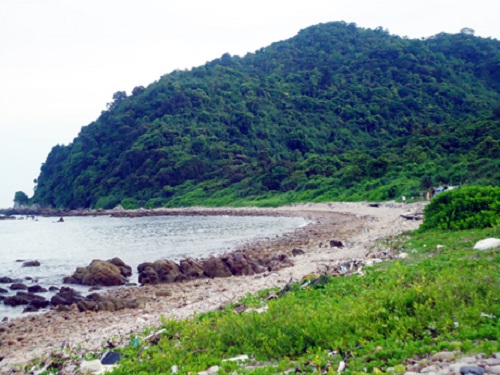
The coast surrounding Phu Quoc is relatively flat and allows visitors some very scenic walking.

The mountains on the island range from around 300-600 meters and provide far more strenuous trekking.The National Park in the northern part of Phu Quoc is as yet relatively undeveloped in terms of walking trails and forests can be quiet dense. There are plans to build a walking trail in future to Mount Chua (603m) the highest mountain on Phu Quoc Island.

Thứ Ba, 18 tháng 11, 2014

Scuba-Diving in Halong Bay

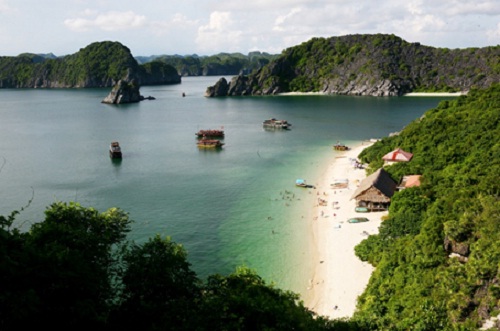
Halong Bay is a spectacular location for sightseeing in Vietnam. Located in the Gulf of Tonkin, it forms an amazing seascape of limestone pillars along with more than 1,600 islands and islets. Travelers coming to Halong Bay will enjoy not only the boat trip, sea kayaking but also the very scuba diving experience. Scuba diving has been recently opened in Halong Bay making this place a must-sea for underwater lovers. The time from April to December is the most wonderful period for Travellers to join “Halong Bay Scuba Diving”. The temperature of water at this time is from 26-29 celsius degrees. Travel Halong bay

Scuba diving with Halong Voyage – a the special product which no one has done before in Halong bay. Travelers can explore hidden beauty underwater with thousands of splendid coral and fish like sergeant major fish, Clark’s anemone fish. Tourists will see colorful their method survive. Underwater world will make you to feel novel, small and peaceful as come back inside your mother. Tourist will perfect relax and excited to discovery underwater world.  With internationally-licensed, well-trained scuba divers and assistants, we guarantee the safety, papering amenities with friendly and attentive management which make you unforgettable experience. Vietnam tours
Scuba-Diving in Halong Bay
When tourists snorkel underwater in Halong bay, you will provide useful equipment such as: mask, fins, snorkel, cylinder, exposure suite, compass, regulator…  All facilities are regularly checked and match safety standard. Therefore, it’s unnecessary to worry about your safety.
Some Tips for diving longer and deeper safely

There are a number of techniques to increase the diver's ability to dive deeper and longer:

- Technical diving – diving deeper than 40 meters (130 ft), using mixed gases, and/or entering overhead environments (caves or wrecks)

- Surface supplied diving – use of umbilical gas supply and diving helmets

- Saturation diving – long-term use of underwater habitats under pressure and a gradual release of pressure over several days in a decompression chamber at the end of a dive.

Thứ Năm, 6 tháng 11, 2014

Tips for safe dining of seafood in Halong

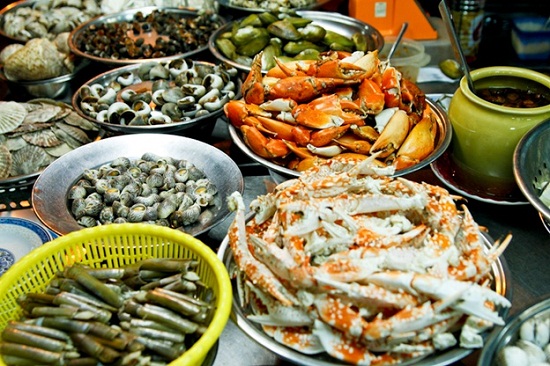
Halong, known as the world heritage city with thousands of caves and grottos, is also famous for its abundance of nutritious and delicious varieties of seafood like crab, prawn, fish, or sea-snail. Gourmets who come to Halong can hardy resist the taste of fresh seafood without the worry of gaining weight. However, there is always risk of food poisoning hidden in seafood. Below are some safety tips to avoid trouble with dining in Halong bay tours.

1. Avoid eating raw seafood in general

Raw seafood or unprocessed seafood may contain the Vibrio parahaemolyticus bacteria which is harmful for the digestive system. Moreover, the bacteria can live under high temperature (more than 80oC). Although sushi and sashimi is very tempting, try not to eat too much, esepecially from the dubious dining places. Fresh seafood in Halong Bay

2. Never eat raw crab
Tips for safe dining of seafood in Halong

Inside unprocessed Ha Long’s crab is a very dangerous parasitic bacteria named lung fluke that may mess up your respiratory system with symptoms like lead to severe cough, coughing up blood, or even cerebral paralysis. It is highly recommended that crabs have to be fully cooked for at least 20-30 minutes. Travel to Halong with Vietnam tours

3. Seafood shopping tips

Buying your own seafood in a market to bring back to your hotel and ask the chefs to cook for you is a very enjoyable experience. However, remember to choose ones which are still alive and fresh, because dead sea-animals, especially one that has shells, contain much higher level of bacteria or poisons.

4. Avoid drinking excessive beer while eating seafood

Scientists say drinking beer while eating seafood increases the probability of having gout or arthritis disease. Therefore, it is recommended that you limit your alcohol consumption when being served seafood.

5. Avoid having fruits/tea after having seafood

The reason is that the acid inside sour fruits may negatively affect the process of absorbing protein from seafood into your body. Besides, tannin from fruits may react with calcium and protein from seafood to stimulate your digestive system that leads to stomach-ache and vomiting. Same thing happens if you drink tea after a seafood meal.

Thứ Năm, 30 tháng 10, 2014

Kỹ thuật cho hươu sao ăn

- Cho ăn đúng cách: Hươu giống chủ yếu hoạt động vào ban đêm, ban đêm hươu ăn tới 60% tổng số thức ăn của khẩu phần, vì vậy mỗi lần cho ăn trong ngày không nhiều, ban ngày hươu ăn ít mà dành thời gian nhai lại thức ăn qua đêm. Đây là một đặc điểm hết sức quan trọng mà người chăn nuôi cần nắm biết. Vì vậy lịch phân bố cho hươu ăn như sau:

Bữa thứ nhất: 6-7 giờ sáng cho ăn 15% thức ăn xanh.
Bữa thứ hai: 9-10giờ sáng cho ăn 15% thức ăn xanh.
Bữa thứ ba: 13-14 giờ chiều cho ăn 10% thức ăn xanh cộng với thức ăn tinh trong ngày.
Bữa thứ tư: 17 - 18giờ tối cho ăn 30% thức ăn xanh.
Bữa thứ năm: 22 giờ tối cho ăn 30% thức ăn xanh.

- Thức ăn tinh không được cho hươu ăn vào buổi sang vì ăn như vậy sẽ làm cho hươu ăn ít thức ăn xanh và thức ăn củ quả. Nên cho hươu ăn thức ăn tinh vào bữa ăn thứ ba vào lúc 13 – 14 giờ trong ngày. Hàng ngày người chăn nuôi phải thường xuyên theo dõi phân của hươu để điều chỉnh thức ăn cho hợp lý. Thường phân của hươu có dạng viên bóng, cứng hình bầu dục nếu khác với bình thường thì cần xem xét lại thức ăn cho hươu.
  Vận động – Tắm nắng – tắm chải.
Cho hươu ăn nhiều loại thức ăn xanh, đặc tính của chúng là thích ăn nhiều loại cỏ non, lá non và các loại cây có mủ. Không nên cho hươu ăn độc nhất một loại thức ăn thì sinh trưởng và phát triển, khả năng sản xuất cho nhung huou tuoi sẽ bị hạn chế.

 
Kỹ thuật cho hươu sao ăn
a). Vận động: Tuỳ thuộc vào hình thức nuôi khác nhau nên cho hươu vận động khác nhau. Hươu là động vật con mang tính hoang dã nên rất thích vận động, chạy, nhảy rất hiếu động nên khi bị bó hẹp trong nuôi nhốt thì rất khó chịu. Chúng ta nên tạo diện tích sân chơi cho hươu bằng cách khoanh vùng rộng bằng rào chắn cao 2 – 2.5m thì khả năng vận động và tắm nắng cuả hươu thịt được tốt hơn và thích nghi với điều kiện sinh lý của nó hơn, ít gây ra các hiện tượng ức chế(stree) con vật thoải mái hơn, góp phần tiêu hoá, trao đổi chất được tốt hơn.

Nếu không có điều kiện thì cần phải thiết kế mái che có lắp tấm kính có độ rộng 40X50cm cho nắng rọi vào 1giờ/ngày. Có thể thiết kế chồng cho nắng xuyên vào chuồng 7-8 giờ/ngày.

b). Tắm chải. Thứ tự tắm chải từ đầu đến mông, từ trên xuống dưới, mỗi lần chỉ cần 5- 10 phút. Trước khi tám chải phải tập làm quen với con vật để tạo cho nó có phản xạ có điều kiện. Trong quá trình tắm chải chú ý phát hiện một số ký sinh trùng nư ve, ghẽ, lỡ, loét…Nếu có hãy dùng các biện pháp sau đối với ve, ghẽ…

Bắt diệt liên tục bằng cơ học.

Dùng Ivermactin điều trị nội ngoại ký sinh trùng để tiêm 1ml/7kg trọng lượng.

Dùng các thuốc sát trùng ngoài da và khử trùng chuồng trại. Định kỳ dọn vệ sinh chuồng trại.

Sau đây chúng ta hãy tìm hiểu cụ thể cách nuôi dưỡng mỗi loại hươu.

Halong Bay swimming activities

Halong Bay is a ideal travel destination - a World Heritage Site, with thousands of limestone islands and caves. There are countless places to stop for swimming, fishing, snorkeling and kayaking when cursing around islands. There are many charming and attractive beaches; it is suitable for swimming activities such as Tra Gioi Beach, Ba Cua Beach, Tuan Chau Beach, Titov Beach, Minh Chau Beach. Visit halong bay cruise
Halong Bay swimming activities
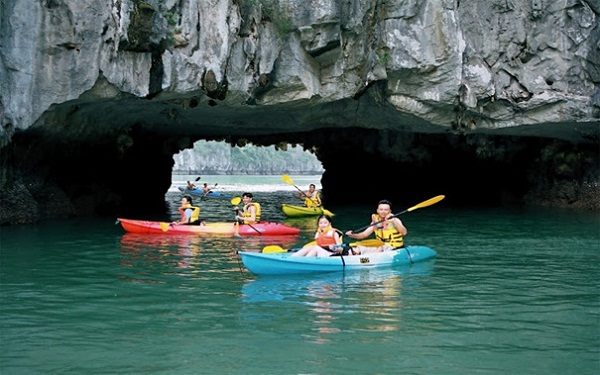
The stunning scenery of sheer mountain cliffs rising out of the bay makes an ideal backdrop to water-based activities.The water of beach is emerald green and turquoise color so you cannot see the bottom. Halong Bay is the safe place for swimming. Because beach is calm waters and tourists will be provided useful equipment such as: life jackets. Moreover the sailors and staff of the ship watched while you were swimming to alert you for dangers in case. Swimming in Halong bay is really nice and refreshing. visit halong long: 3 best places kayaking in Halong bay
 Swimming Safe guides:

- Check with the lifeguard on surf conditions before swimming. If lifeguards give you directions or instructions from the stand, obey them. Never swim alone - use the buddy system. 

- Don't overestimate your swimming ability, especially early in the summer when the water is cold. Swimming ability is severely decreased in cold water.

- Judge your ability to participate in beach activities based on your swimming skills without the assistance of rafts and other flotation devices.

- Never dive into shallow water, or water of unknown depth.

- If you are confronted by a large wave and there is not enough time to get away from it, try to dive underneath the wave. Keep your body as low as possible until the wave passes over you. Timing is important, dive into the base of the wave just before it breaks. Do not dive if the water is too shallow - instead crouch and keep a low body profile. travel to Vietnam

- If caught in rip currents, relax and swim toward the shore at a 45-degree angle until you are free of the current. If the rip currents are strong, swim parallel with the shoreline in the same direction as the littoral current and then swim diagonally toward the shore. If you are not able to swim out of the currents, call or wave for help.

- When body surfing, do not ride waves in a straight line toward shore. Instead, surf at an angle to the waves. Stay away from the white water in the wave center to avoid going "over the falls."

- Never swim while intoxicated. Alcohol impairs judgment, unnecessary risks are taken and a swimmer will tire more easily, increasing the chance of an accident.

Thứ Năm, 23 tháng 10, 2014

Bai Tu Long National Park

Bai Tu Long National Park
Bai Tu Long National Park is a protected area zone in northeastern Vietnam. It was established in 2001, succeeding from the former Ba Mun National Conservation Zone. It is one of seven Vietnamese amphibian national parks which has both terrestrial zone and aquatic zone.

It is located within Bai Tu Long bay, which with Halong Bay forms an impressive scenery of sea and islands. Including thousands of islands and rocks, they create one of the most beautiful bays in the world. Visit Bai Tu Long Bay with Halong bay tours

According to legend, an immense dragon descended to Ha Long Bay (meaning ‘’Descending Dragon’’) millions years ago, dropping numerous eggs. These eggs hatched forming thousands of rocks and islands. The tail of the dragon extended far to the sea, forming Bach Long Vi (meaning ‘’The Tail of the White Dragon’’). As she returned to heaven, she said good bye to her offspring at the Bai Tu Long Bay (means ‘’The dragon parts the offsprings’’).


Now the Park is part of Van Don district, 20km distant from Cai Rong town.

Geography
The exactly geographical position is in a rectangle between 20o55’05″ and 21o15’10″ North latitude, 107o30’10″ and 107o46’20″ East longitude. It administratively consists of 3 communes : Minh Chau, Van Yen and Halong city of Van Don district. Travel Halong with Dragon Pearl Junk

It is composed from a terrestrial area of 61.25 km2 and an aquatic area of 96.58 km2. The zone includes over 40 islands and rocks which form three groups : Ba Mun group, Tra Ngo group and Sau group. The aquatic area includes the sea zone between the islands and the narrows between the park area and the land area which has boundary of 1 km offshore. The National Park also includes a buffer zone of approximately 165.34 km2 , which is located in a larger area including 5 communes : Minh Chau, Van Yen, Ban Sen, Quan Lan and Halong. The total population of the core zone and the buffer zone is around 24.000. Read more: Vietnam travel

Ecosystem
The National Park includes five kinds of ecosystems : Rain Broad Leaves Forest, Limestone Forest, Littoral Forest, Coral Area and Shallow Water Area.

The Rain Broad Leaves Forest area is mostly secondary forest. The average canopy covers 50 – 90%. 494 species belonging to 337 genera of 117 families have been found in this type of ecosystem. Some endangered species include Cycas balansae, Radix marindae officinalis, Ardisia sylvestris Pitard, Smilax glabra, Leopard cat (Prionailurus bengalensis), Indian muntjac (Muntiacus muntjak), Small Indian civet (Viverricula indica), Large Indian civet (Viverra zibetha).

The Limestone Forest area is forest growing in poor soil with particles of limestone on rocky islands. Some rare animals found there include Serow, Rhesus macaque.

The Littoral Ecosystem in the park is small areas surrounding the islands. It has a rather large tidal variation and is biologically highly diverse with 251 species including 19 species of mangrove, 17 species of seaweed , 29 species of marine worms , 149 species of molluscs, 22 species of crustaceans and 15 species of echinoderms.

The Coral area is located from the water depths of low tide to 10m deep. 409 species have been found including groupers, sea bass, crabs, snails, abalone and seaweeds.

The Shallow Water area covers a large area around the islands, beyond the tidal area and extending from 1km to around 4km. These areas have not been profoundly researched but 539 species have been found.

Bai Tu Long Bay overview

Bai Tu Long is a beautiful Bay lying within the area of the gulf of Tonkin, on the northeast of Vietnam. The bay comprises a part of Halong’s sea, Cam Pha town and Van Don Island District. It shares the border with Halong Bay on the southwest, with the sea on the east, with Cam Pha town on the west and with Co To island district on the northeast. Bai Tu Long Bay includes hundred of islands and islets, several among which are residence for local people.

Along with Halong Bay, Bai Tu Long Bay is one among the wonderful natural wonders, with beautiful islands and long-white-sandy beaches. Bai Tu Long is well-known for foreign tourists not only for its natural beauty, but also for a special tourist attraction – Bai Tu Long eco-tourist site. Bai Tu Long eco-tourist site lies within the area of Van Don Island district. It covers a total area of 100 ha with over 10km coastline. The construction style is the combination of the Asian and Western architecture style with coastal self-contained stilt houses harmoniously lying among the natural scenery.

Bai Tu Long National Park is another must-see destination, which represents Vietnam’s sea preservation site, which has attracted a larger number of both domestic and foreign tourists.

Bai Tu Long Bay’s eco-system is a highly diverse one with typical ecosystems such as mangrove forest, coral reef, tropical forest ecosystems. It is estimated that there are 391 species of marine creatures, most of which bring about high economic and scientific value.

Bai Tu Long Bay has great potential for developing tourism. Recently, the Bay has received much concern from visitors. With fascinating beauty and originated landscape, Bai Tu Long Bay promises to be a popular tourist attraction in coming time.

Thứ Tư, 15 tháng 10, 2014

Shopping in Halong Bay

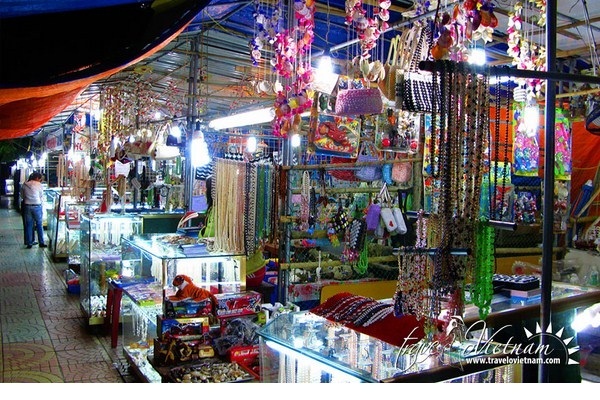
Shopping is an essential part for any tourists. From shopping, tourists can learn more about culture and society of place that they visit, as well as bring home some nice souvenirs for their friends or family. There are several locations for tourists to purchase excellent souvenirs, but tourists should be aware of some issues that might negatively influence their shopping time here. Halong bay tours
One of the most serious problems in not only Halong City but also in various tourism spots in Vietnam is related to the price of products, or the way that sellers set prices for their goods. If tourists spend time on shopping places in this city, particularly at markets where prices have no apparent range and standard, they are usually ask for higher price for actual price of the products. Often, these prices can be 1.5 times higher than actual cost, but in some places where sellers are extremely avaricious, they can be 2 or 3 times higher. Therefore, suggestion to tourists is to carefully research about average price range of products that they desire to purchase before to not to be charged by sky high price. Tourists should bargain for a better price if they think the product is overpriced. However, tourists should not bargain in supermarkets or shopping centers, where prices are already set. 
Indochina Sails cruise halong
Shopping in Halong Bay

Another issue that tourists should be aware of is fake products. Halong City is located in Quang Ning Province, where has border with China. Therefore, fake products from China are bought frequently by local sellers to earn more profit. Therefore, tourists are recommended to check the quality and origin of products thoroughly before purchasing, as well as shop at ensured places such as shopping mall or authorized shops.